Skip to content
  • Career
  • Phone book
  • Events
  • MLZ Webpage
  • MLZ User Office
  • Webmail (internal)
  • Webmail ("Betrieb")
  • Intranet
  • de
  • en
  • Research Neutron Source Heinz Maier-Leibnitz (FRM II)
  • Technical University of Munich
Technical University of Munich
  • About us
  • Neutron Source
  • Safety
  • Transports
  • Research
  • Industry
  • Career
Front view of the experimental hall housing the ODIN neutron imaging instrument

ODIN is one of the first instruments to be completed at the European Spallation Source (ESS) in Sweden and is ready for commissioning using neutron radiation.

© TUM

Making research data more usable - that is the goal of the DFG funded project DAPHNE4NFDI

© DAPHNE4NFDI ; Bernhard Ludewig, FRM II / TUM ; Wenzel Schürmann, TUM

Detective work: Tracking hydrogen absorption in real time

© Jan Greune, MCQST ; Bernhard Ludewig, FRM II / TUM

Bird’s-eye view of the FRM II research site.

1.4 million euros for AI research at the MLZ: four projects have received funding from the BMFTR.

© TUM

There was a huge turnout for the guided tours and stalls at the open day.

© FRM II / TUM

An international research team with Jitae Park at the MLZ reports that the modeled storage lifetime of liquid hydrogen has more than tripled.

© Wolfgang Filser, TUM and ChatGPT

Dr Theresia Heiden-Hecht and Dr Tobias Neuwirth from the MLZ receive awards by the Komitee Forschung mit Neutronen (KFN).

© Bernhard Ludewig, FRM II / TUM

How can non-destructive testing methods enable more sustainable production?

© Laura Richter, FRM II / TUM

Instrument scientist Dr Alexandros Koutsioumpas works on the MARIA neutron reflectometer and a tractor with one person on board is driving across a field and ploughing the soil

New research has revealed how soil bacteria activate the immune defences of plants.

© Wenzel Schuermann / TUM and Pixabay, PublicDomainImages

Prof. Andreas Meyer will take over from Prof. Christian Pfleiderer as Scientific Director of FRM II on 1 October.

© Laura Richter, FRM II / TUM; Astrid Eckert, TUM

Multitasking between helium and magnets: Our sample environment team visited the PSI.

© PSI

The children from the Nachbarschaftshilfe Garching have lots of questions: How many neutrons can fit on a football pitch? And how can a train float upside down?

© Esther Schmid, FRM II / TUM

Researchers have used neutrons to observe the breakdown of PET by bacterial enzymes – which could enable plastic to be recycled more quickly.

© Bernhard Ludewig, FRM II / TUM and (created using AI, edited by) Reiner Müller, FRM II / TUM

New research consortium: Testing materials for fusion power plants

© Laura Richter, FRM II/TUM

Learn more about us.

© Andreas Heddergott, FRM II / TUM

Slide 1 of 15

Forschungs-Neutronenquelle
Heinz Maier-Leibnitz (FRM II)

The Forschungs-Neutronenquelle Heinz Maier-Leibnitz (FRM II)  is a Corporate Research Center of the Technical University of Munich (TUM) located on the premises of the modern research campus in Garching. Here, neutrons and positrons enable a wide range of applications in research, industry and medicine: from developing new technologies, such as batteries for electric cars, to precise anti-cancer drugs.

RSS

Events

16.11.2026
Probing hydrogen in steels by neutron imaging and mechanical testing (Seminar: Neutrons in Research and Industry)
23.11.2026
Seeing Inside the Battery: Neutron Scattering as a Window into Electrochemical Processes (Seminar: Neutrons in Research and Industry)
02.12.2026
MLZ User Meeting 2026 (Conference)
04.12.2026
Takin Workshop (DEVA Workshop)
14.12.2026
Information Field Theory Concepts & Astrophysical Applications (Seminar: Neutrons in Research and Industry)
26.07.2027
14th International Conference on Highly Frustrated Magnetism HFM27 (Conference)
10.09.2028
21st International Conference on Positron Annihilation (Conference)

News

09.11.2026

ODIN ready for neutrons

Front view of the experimental hall housing the ODIN neutron imaging instrument

ODIN (“Optical and Diffraction Imaging with Neutrons”), an imaging instrument and one of the first scientific instruments to be completed at the European Spallation Source (ESS) in Lund, Sweden, is now ready… [read more]

30.10.2026

Making research data more usable

The German Research Foundation elected to continue funding the consortium "Data from Photon and Neutron Experiments" (DAPHNE4NFDI) in October 2026. DAPHNE4NFDI is a consortium of 18 organisations, including… [read more]

22.10.2026

Detective work: Tracking hydrogen absorption in real time

In a joint multi-disciplinary study, MLZ-collaborators have analyzed in real time how hydrogen enters thin layers of metal. Main author, Dr. Laura Guasco, and her colleague and co-author Dr. Sabine Pütter talk… [read more]

  • 1
  • 2
  • 3
  • …
  • Next >
  • Last >>

© Bernhard Ludewig, FRM II / TUM

Neutron Source

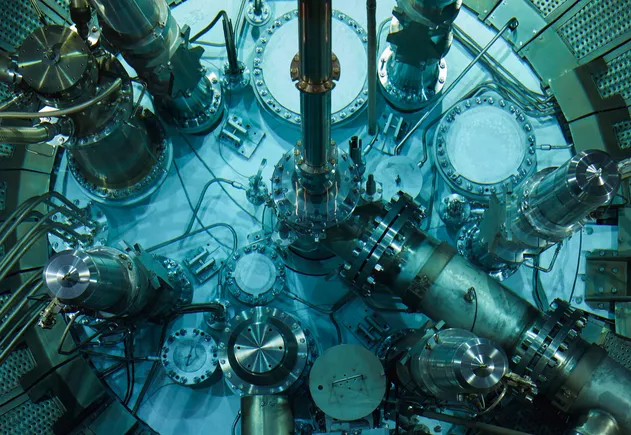
The FRM II is one of the most powerful and modern neutron sources worldwide.
© Bernhard Ludewig, FRM II / TUM

Research

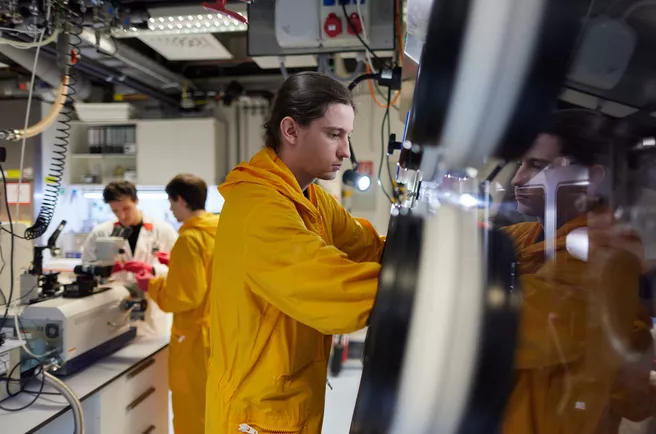
The Heinz Maier-Leibnitz Zentrum (MLZ) - cutting-edge research with neutrons and positrons at the FRM II.

© Astrid Eckert, FRM II / TUM

Join us!

You would like to work at FRM II? 
Here you can find our current job offers.
Industry
© Bernhard Ludewig, FRM II / TUM

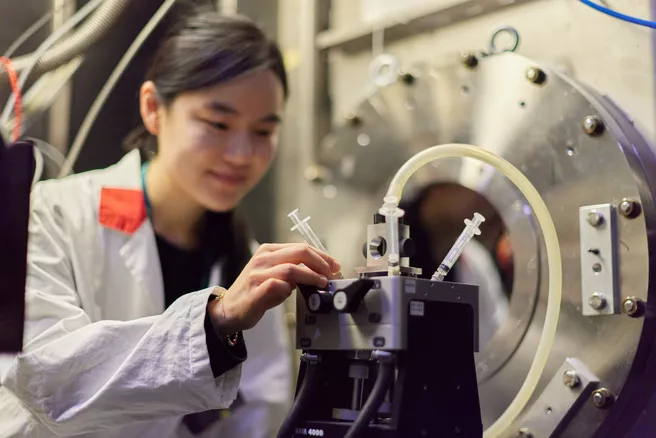
Industry

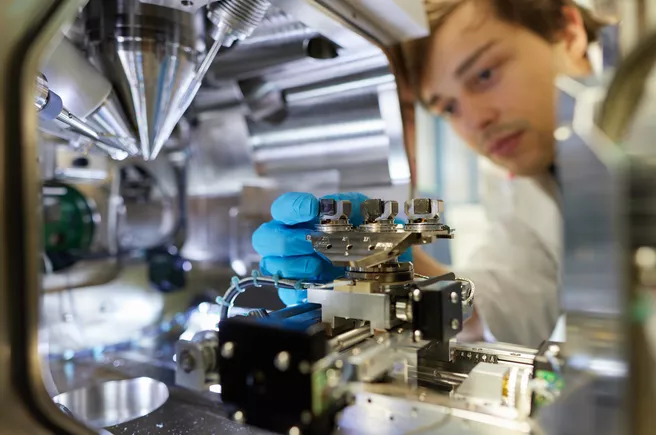
Material analysis, component testing and irradiation for the automotive, aerospace and semiconductor industries as well as for mechanical engineering, chemicals, medical technology ...
© Bernhard Ludewig, FRM II / TUM

Medicine

In addition to radioisotopes for the diagnosis and treatment of tumor diseases, the FRM II also has a facility for the teletherapy of malignant tumors.
© FRM II / TUM

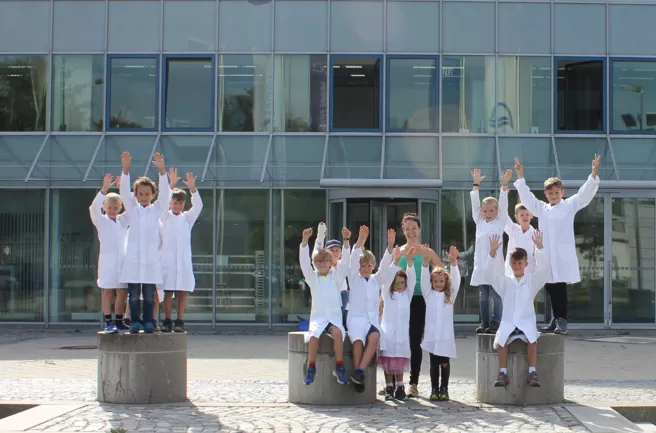
Visiting the FRM II

Visitors at the FRM II are welcome!
This is how you can reach us.


To top
  • Privacy
  • Imprint
  • Accessibility