Skip to content
  • Career
  • Phone book
  • Events
  • MLZ Webpage
  • MLZ User Office
  • Webmail (internal)
  • Webmail ("Betrieb")
  • Intranet
  • de
  • en
  • Research Neutron Source Heinz Maier-Leibnitz (FRM II)
  • Technical University of Munich
Technical University of Munich
  • Home
  • About us
    • From "Atomic Egg" to FRM II
    • Facts & Figures
      • Auftragsvergaben
    • News & Media
      • News article
      • Films
        • Interactive panorama
      • Brochures
        • Annual Reports
        • Newsletter
      • Events
        • Maustag for Young and Old 2025
    • Contact
  • The Neutron Source
    • Neutrons
    • Fuel elements
      • Life cycle of a fuel element
      • Disposal of fuel elements
        • FRM II fuel element
        • Storage in Ahaus
        • Secure packaging
        • Transport vehicle
        • Permits
        • Function test
        • FAQ
      • Conversion
        • What does the conversion entail
        • Objectives of the conversion
        • Who is working on the conversion?
        • Fact check
    • Reactor
      • Installations in the pool
      • Guiding the beams
        • Cooling circuits
    • Irradiation facilities
      • Rabbit Irradiation
      • Capsule Irradiation
      • Mechanical Irradiation
      • Irradiation Position in the Control Rod
      • Irradiation with fast neutrons
      • Future Mo-99 irradiation facility
    • Safety
  • Safe all round
    • Protection of persons
    • Monitoring the facility
    • Monitoring the environment
      • Discharge of C-14
  • Transporte
  • Research
  • Medicine
    • Radioisotopes for diagnostics
    • Radioisotopes for therapy
    • Tumor irradiation
  • Industry
    • Materialanalyse
      • TUM-Expertenforen
      • VDI Fachausschuss 101
        • Bildgebende Verfahren
        • Optische Messverfahren
        • Eigenspannungs- und Texturanalyse
        • Analytik
      • Analysis with neutrons
    • Radioisotopes for industry
    • Silicon doping
  • Career
  • Guided Tours
  1. Home
  2. About us
  3. News & Media
  4. News article

News

24.04.2026

MLZ researchers represented on the Committee on Neutron Research

Three scientists from the Heinz Maier-Leibnitz Zentrum have been elected to the Committee for Neutron Research (KFN). Dr Michael Schulz, Prof. Dr Christian Reiter, and Dr Andreas Houben received the most votes for the neutron research committee. [read more]

15.04.2026

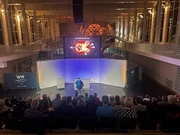
Neutrons instead of alchemy – tracing elements at the Deutsches Museum

In a live stream and in person at the Deutsches Museum as part of the ‘Science for Everyone’ series, Dr Christian Stieghorst demonstrated how neutrons are used for elemental analysis at the FRM II. Under the title ‘(No) Alchemy with Neutrons – On the Traces of the Elements’ he inspired around 180… [read more]

13.04.2026

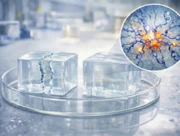
Self-healing materials in neutron light

A material that repairs itself after tearing – sounds like science fiction, but it is already being used in the form of hydrogels for wound healing and in agriculture. Researchers at the Heinz Maier-Leibnitz Zentrum (MLZ) have used neutrons to investigate how these self-healing polymers are… [read more]

01.04.2026

€7.6 million for research with neutrons and positrons

From defect analysis in semiconductors with positrons to cancer therapy with neutrons: ten research projects at the Heinz Maier-Leibnitz Zentrum (MLZ) are receiving funding of around 7.6 million euros from the Federal Ministry of Research, Technology and Space (BMFTR). [read more]

25.03.2026

Neutron research shows solvent microstructure influences nanomaterials

Nanoparticles have become an integral part of our everyday lives: they are found in medicines, catalysts, paints, and high-tech materials. Traditionally, solvents have been treated as a uniform background. A new study shows that solvents play a far more active role at the nanoscale than predicted. [read more]

18.03.2026

Green biomass as a sustainable source of protein

The food industry is increasingly focusing on sustainable products. Proteins from green biomass are a promising option, as a research team involving the MLZ has discovered. These can be used, for example, as stabilisers in emulsions, such as in plant-based alternatives to yogurt, milk, ice cream, or… [read more]

11.03.2026

Four-legged lifesavers at FRM II

On a Saturday, 13 dogs pant around the cooling towers of FRM II, sniffing around the staircase next to the nuclear egg. What at first glance looks like a controlled mass dog walk has a meaningful purpose: the BRH Rettungshundestaffel Erdinger Moos e.V. (BRH Rescue Dog Unit Erdinger Moos) is… [read more]

04.03.2026

Liquid salt for new reactor concepts

In the future, liquid molten salts could contribute to more efficient, climate-friendly energy generation. At FRM II, PhD student Liliana Quintero Zambrano is researching the use of liquid salt as a cooling and heat transfer medium in new reactor designs. The project is funded by TÜV NORD. [read more]

25.02.2026

Why corals bleach

Rising sea temperatures are causing coral reefs around the world to bleach. For the first time, a research team at the Research Neutron Source Heinz Maier-Leibnitz (FRM II) at the Technical University of Munich (TUM) has investigated the biological processes behind coral bleaching directly in living… [read more]

11.02.2026

How hydrogen affects titanium implants

Whether used to treat bone fractures, replace teeth or act as pacemakers, metallic implants have become an irreplaceable part of modern medicine. They must remain stable while integrating with surrounding tissue. A new avenue being explored in the field of biological implants is designing… [read more]

  • 1
  • 2
  • 3
  • …
  • Next >
  • Last >>
To top
  • Privacy
  • Imprint
  • Accessibility